


What the EU’s New Packaging Regulation Really Means for Product Design
Highlights
- PPWR is a binding European regulation with direct applicability across all EU member states
- Compliance is defined primarily through packaging characteristics and performance, not documentation alone
- Design decisions therefore play a decisive role in whether compliance can be achieved
- Pilotfish integrates PPWR considerations at the earliest stages of product development
Table of Contents
- What is PPWR, explained in simple terms
- Why PPWR is a design problem, not just a legal one
- What the regulation actually requires
- Expert perspective
- How we implement PPWR in new product development
- Common mistakes teams make with PPWR
- FAQ
1. What Is PPWR, Explained in Simple Terms
Let's make it simple with breaking it down.
Europe produces too much packaging waste. The EU decided that tweaking the old rules wasn’t enough. So, they created the Packaging and Packaging Waste Regulation, or PPWR.
Its goals are clear:
- prevent unnecessary packaging waste
- improve the recyclability of packaging
- promote reuse and refill systems
- reduce environmental impacts across the packaging lifecycle
The important shift is that this is a regulation, not a suggestion, and not a directive. Once it applies, the rules are the same across all EU member states.
You can find the official overview via the European Commission.
European Commission – Packaging and Packaging Waste
https://environment.ec.europa.eu/topics/waste-and-recycling/packaging-waste_en
EUR-Lex – Proposal for a Packaging and Packaging Waste Regulation (COM/2022/677)
https://eur-lex.europa.eu/legal-content/EN/TXT/?uri=CELEX:52022PC0677
2. Why PPWR Is a Design Problem, Not Just a Legal One
Many companies assume compliance is something you handle toward the end. Legal reviews the packaging. Some documentation gets prepared. Done.
That logic does not work here.
PPWR defines compliance through physical outcomes. It talks about structure, material choices, recyclability, labeling clarity. These are design decisions.
The regulation requires that:
- packaging volume and weight must be minimized by design
- packaging must meet defined recyclability criteria
- unnecessary packaging and packaging waste must be reduced
- consumers must receive clear and harmonized disposal information
These requirements are published in the legislative proposal available via EUR-Lex.
If our packaging is too heavy, overbuilt, glued in a way that prevents separation, or confusing to dispose of, it does not matter how polished your compliance file looks.
EU product compliance framework:
https://single-market-economy.ec.europa.eu/single-market/goods/building-blocks/ce-marking_en
3. What the Regulation Actually Requires
In practical terms, PPWR forces companies to rethink how packaging is conceived.
It pushes reduction at the source. That means less empty space, fewer unnecessary inserts, smarter geometry. It requires packaging to be recyclable in real systems, not just in theory. It introduces reuse targets for certain categories. Additionally, it harmonizes labeling so consumers across the EU understand how to dispose of packaging correctly.
Responsibility sits with the company placing the product on the market. Not the supplier. Not the converter. You.
The regulatory texts and updates are available via the European Commission and EUR-Lex.
Official sources:
European Commission – Packaging and Packaging Waste
https://environment.ec.europa.eu/topics/waste-and-recycling/packaging-waste_en
EUR-Lex – COM/2022/677
https://eur-lex.europa.eu/legal-content/EN/TXT/?uri=CELEX:52022PC0677
4. Expert Perspective (Pilotfish)
“For designers working with packaging today, being aware of regulations like PPWR is no longer optional. Decisions about materials, structure, or labeling can directly affect whether a product can be placed on the EU market. If those considerations come too late, teams often face costly redesigns or compliance risks.”
— Maiya Jensen, Senior Product Designer, Pilotfish
5. How Pilotfish Implement PPWR in New Product Development
At Pilotfish, PPWR requirements are integrated into product development at the earliest possible stages. Packaging is approached as part of a broader system that includes the product itself, user instructions, and end-of-life pathways.
Before industrial design begins, we assess packaging volume, material combinations, recyclability criteria, and labeling requirements in relation to PPWR obligations. Particular attention is given to material separability and to avoiding combinations that obstruct established recycling streams. User understanding is treated as a core design consideration, reflecting the regulation’s emphasis on labeling and consumer information.

Pilotfish supports teams in integrating regulatory requirements directly into product design decisions.
→ Explore our Solutions
→ Contact us to review a product concept at an early stage
6. Common Mistakes Teams Make with PPWR
Many compliance issues related to PPWR do not arise from misunderstanding the regulation itself, but from decisions made early in product and packaging development. Recognizing these common mistakes in advance is essential, as they often become costly or impossible to correct at later stages.
- Treating PPWR as a packaging-only issue
PPWR addresses packaging, packaging waste, reuse systems, and consumer information, not packaging materials alone.
Source: European Commission
https://environment.ec.europa.eu/topics/waste-and-recycling/packaging-waste_en
- Involving design teams too late
Essential requirements such as minimisation and recycle-ability depend on early material and structural decisions.
Source: Article 5 – Packaging minimisation
https://eur-lex.europa.eu/legal-content/EN/TXT/?uri=CELEX:52022PC0677#d1e1883-1-1
- Overcomplicating materials for perceived sustainability
PPWR prioritizes recyclability within real waste streams rather than theoretical sustainability claims.
Source: Article 6 – Recyclable packaging
https://eur-lex.europa.eu/legal-content/EN/TXT/?uri=CELEX:52022PC0677#d1e1924-1-1
- Ignoring user behavior
Correct disposal depends on labeling clarity and user understanding.
Source: Article 11 – Labelling and information requirements
https://eur-lex.europa.eu/legal-content/EN/TXT/?uri=CELEX:52022PC0677#d1e2267-1-1
- Assuming suppliers will manage compliance
Responsibility remains with the economic operator placing the packaging on the market.
Source: COM/2022/677 – General obligations
https://eur-lex.europa.eu/legal-content/EN/TXT/?uri=CELEX:52022PC0677
7. FAQ
What is PPWR in simple terms?
PPWR is an EU regulation intended to reduce packaging waste and ensure packaging is recyclable, reusable, and clearly labeled.
Source: European Commission
https://environment.ec.europa.eu/topics/waste-and-recycling/packaging-waste_en
Does PPWR apply to medical devices and wearables?
Yes. Packaging and labeling requirements apply broadly across product categories.
Source: European Commission
https://environment.ec.europa.eu/topics/waste-and-recycling/packaging-waste_en
When does PPWR apply?
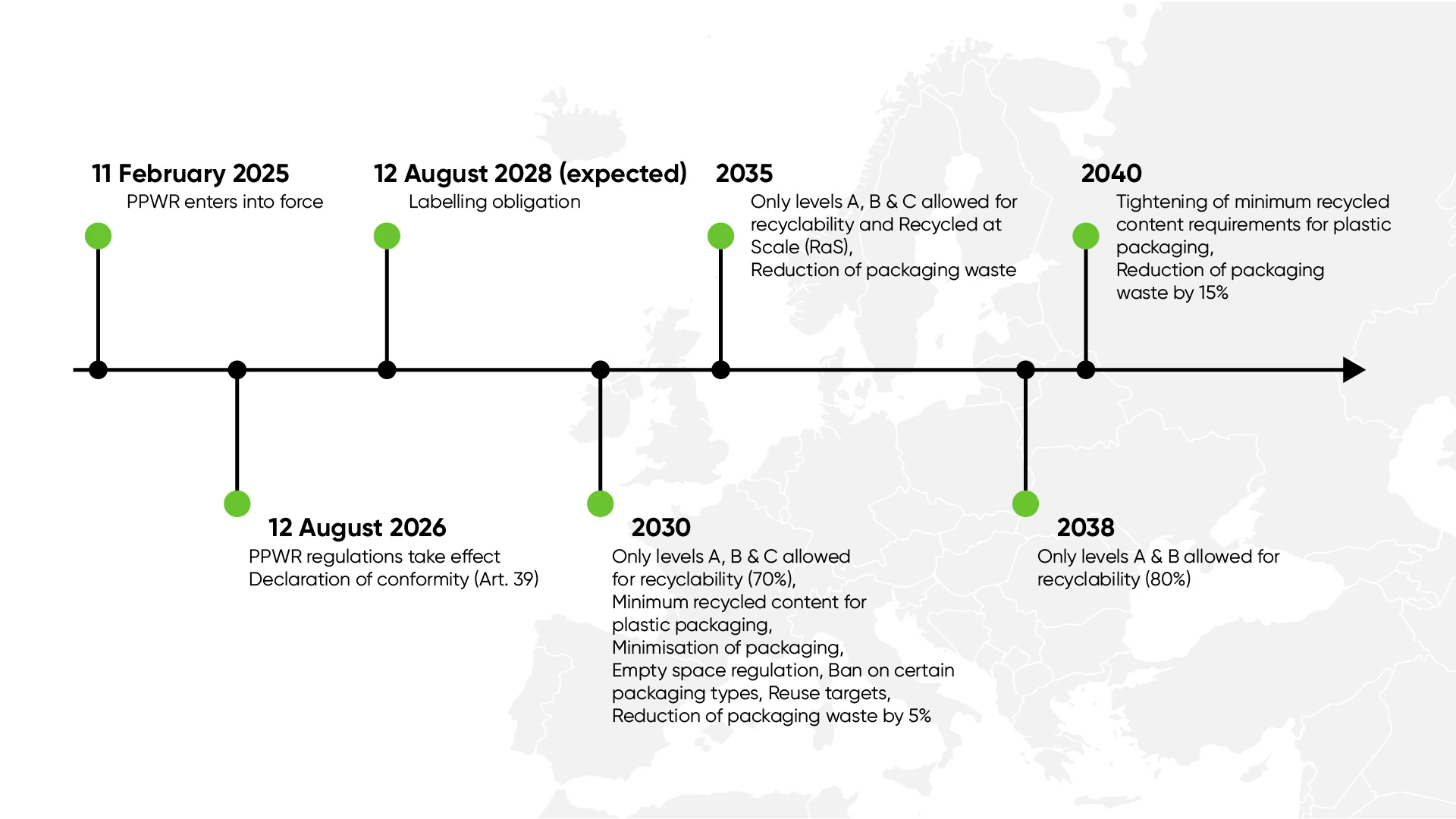
PPWR will apply following formal adoption, with transitional periods depending on product category.
Source: European Parliament legislative process
https://www.europarl.europa.eu/legislative-train/theme-a-european-green-deal/file-revision-of-the-packaging-and-packaging-waste-directive
Can compliant products still feel premium?
Yes. This reflects Pilotfish’s design experience and interpretation.


